-
What set of instruments and wavelengths are best to study atmospheric flows in hot Jupiters
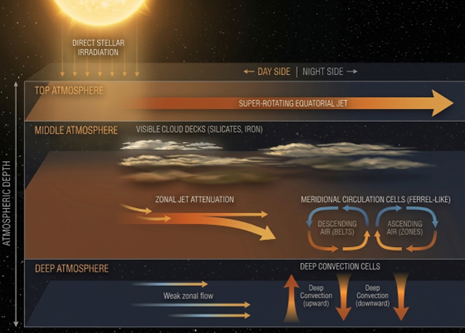
Similar to the planets in our Solar System, the atmospheres of exoplanets show complex winds and circulation patterns driven by planetary rotation and incoming heat from the host star. A particular class of large gas giant planets called hot Jupiters demonstrates incredibly strong winds, reaching several km/s, often in the form of an equatorial jet…
-
Kallichore, an intriguing Jovian satellite: far from the Earth, closer to a JUICE fly-by!!!
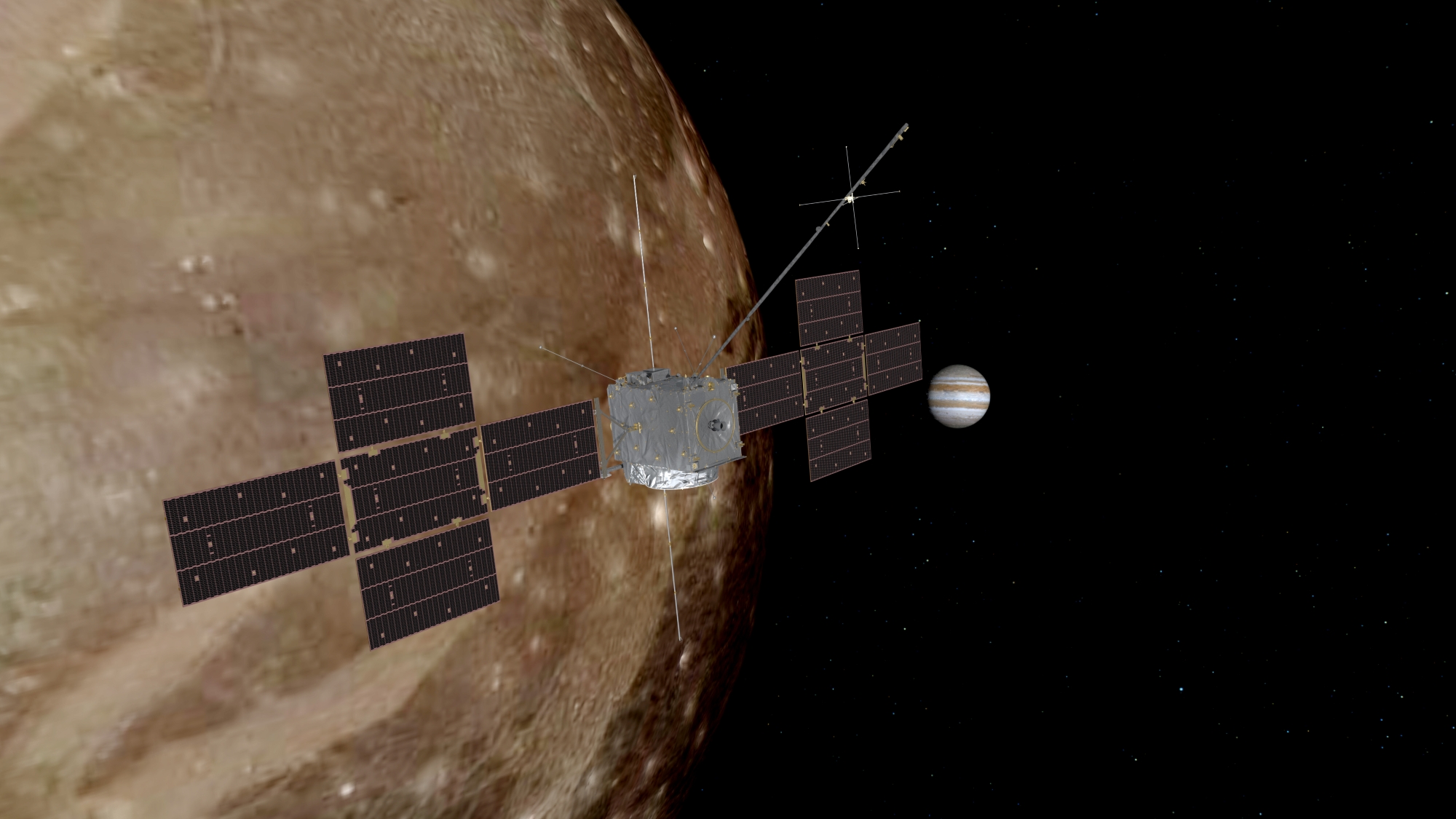
An international team led by Juan Luis Rizos, a member of our group, has unveiled the first detailed portrait of Kallichore, one of Jupiter’s smallest and most elusive moons, opening the door to a possible close encounter by ESA’s JUICE spacecraft. Among Jupiter’s more than one hundred known moons, Kallichore has spent over two decades…
-
New Spacecraft Interface Simulator (SiS#2) successfully welcome in the STESSy lab at IAA-CSIC !!
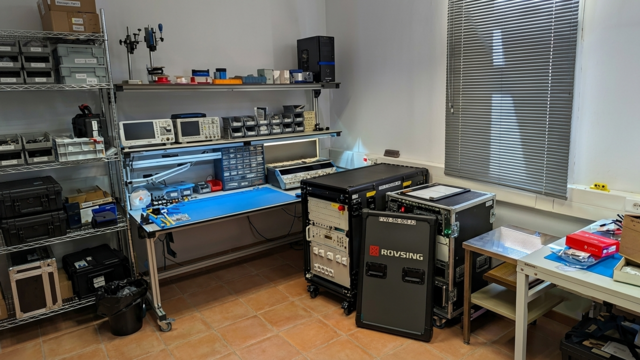
We are pleased to announce that Engineers (Fernando Álvarez, José M. Castro and Alvaro Mazuecos) (see Fig. 1) in the STESSy group have welcomed the Spacecraft Interface Simulator (SiS) installed and operational at our facilities. Fig.1: Fernando Álvarez, José M. Castro, SiS#2 and Álvaro Mazuecos (from left to right) This high-fidelity integrated equipment, built by…
-
A faint young Sun and a warm and wet Mars, how could that be?
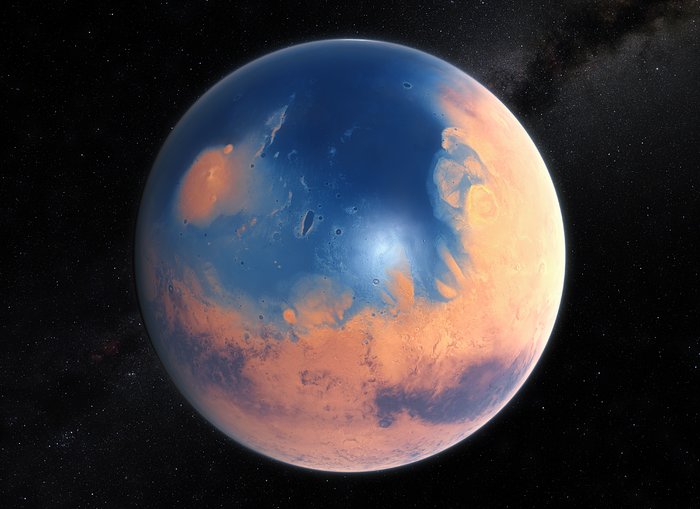
Mars today is a cold, dry desert. But, around 3.8 billion years ago, during the Noachian period, the planet showed clear signs of an active water cycle, with rivers, lakes, and even oceans which we can observe shorelines today. Yet, at that time, the Sun was only about 75% as bright as it is today,…
-
The paths that sculpt a comet
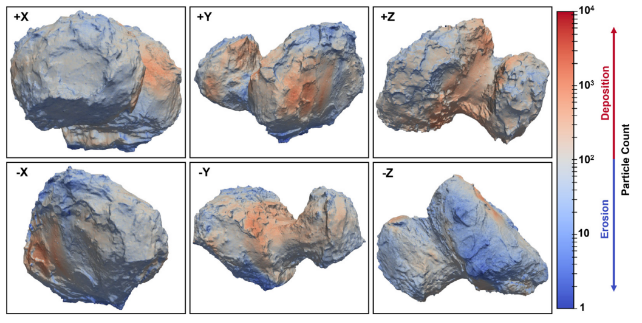
When the Rosetta spacecraft imaged the nucleus of comet 67P/Churyumov-Gerasimenko, the appearance was seen to vary significantly across the surface: some areas showed rock-like, exposed solid material, while others appeared to be coated in a blanket of dust. Subsequently, researchers understood the dust covering to consist of particles ejected by the comet’s own activity but…
-
A single episode may explain Tempel 1’s smooth terrains
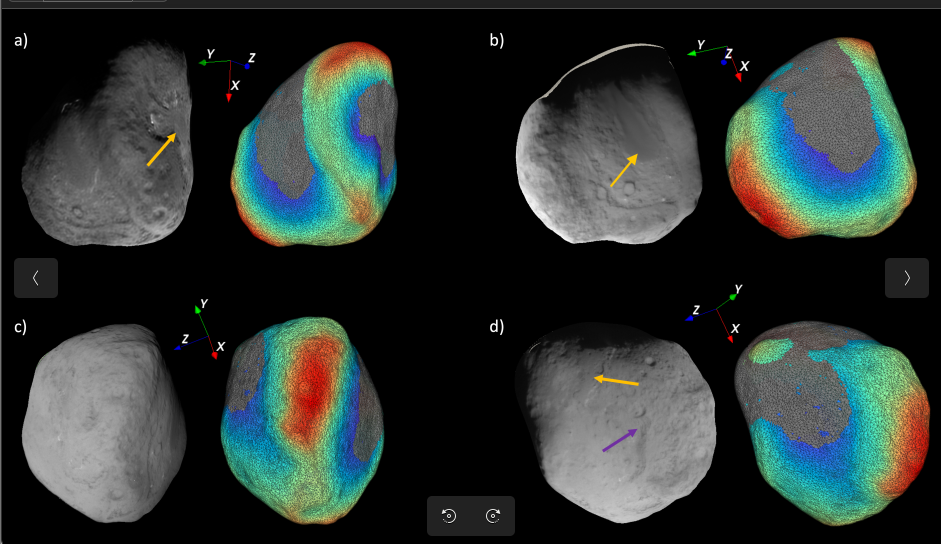
A new study led by Juan Luis Rizos, member of the STESSy group, reveals that a large smooth structure observed on comet 9P/Tempel 1 may have formed as recently as 600 to 1,200 years ago. This timeframe notably coincides with a period of abrupt orbital changes caused by multiple close encounters with Jupiter (Fig. 1),…
-
Sulfur dioxide and sulfuric acid in Venus clouds, where are they gone?
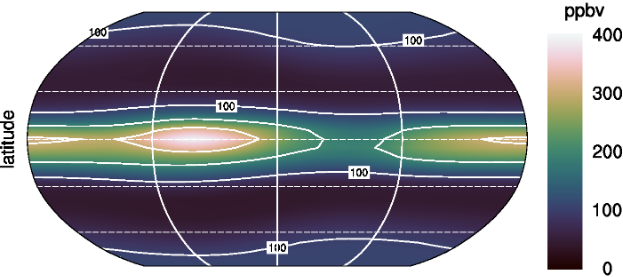
Venus, often called Earth’s “evil twin,” hosts a thick, cloud-covered atmosphere dominated by carbon dioxide with traces of sulfur dioxide (SO2), water vapor, and other minor species. Its extreme conditions, including crushing pressure, scorching temperatures, and opaque sulfuric acid clouds, make observations challenging. To unravel this atmospheric complexity, members of the STESSy group use the…
-
Venus atmosphere: nightglow, global circulation and EnVision mission (ESA-NASA)
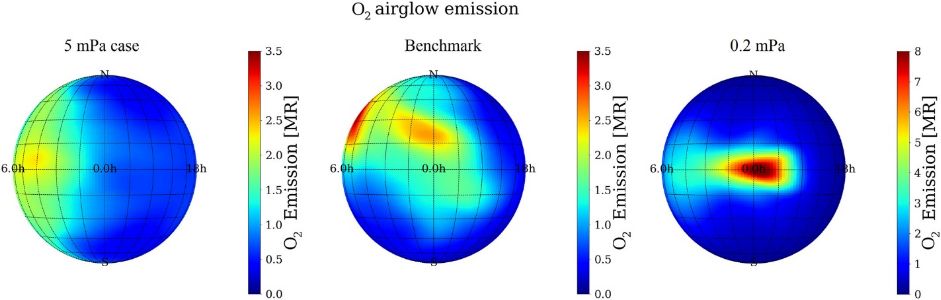
The 80–130 km region of Venus’ atmosphere represents a key transition between superrotation and day-to-night circulation, yet remains poorly characterized by observations. Nevertheless, it is possible to study the Venus atmosphere dynamics by analyzing nightglow emissions as O2 and NO. Such emissions occur when atoms carried from the dayside to the nightside by the thermospheric circulation…
-
Asteroids throw ‘cosmic snowballs’ at each other
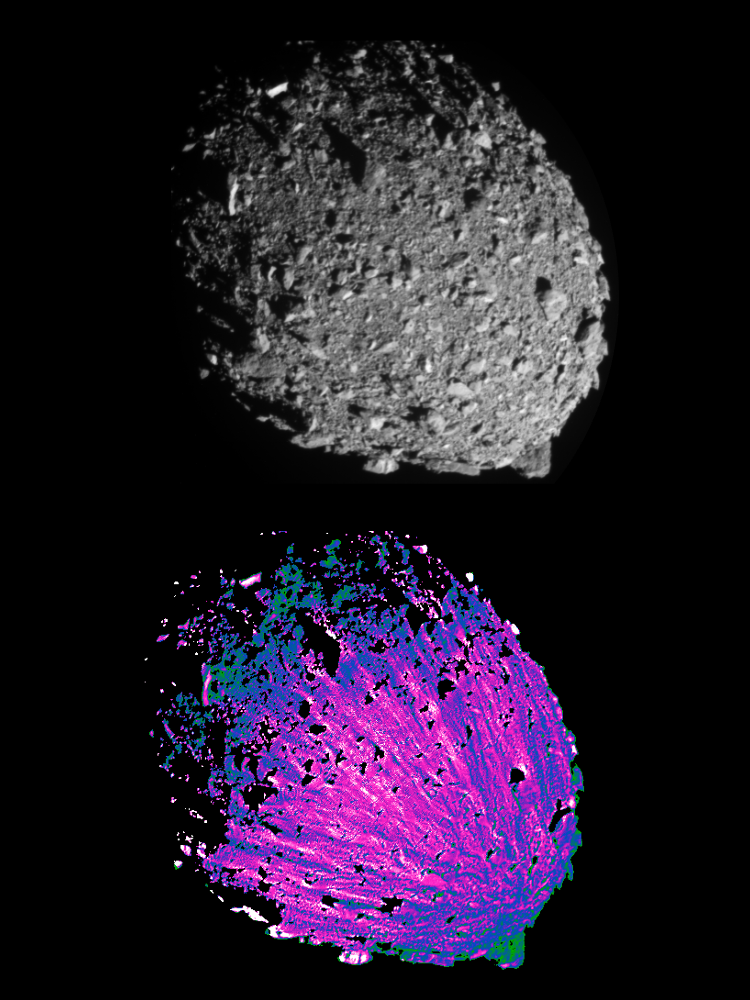
Binary asteroid systems are relatively common among near-Earth objects, with about 15% of asteroids hosting small moons. A study co-led by a member of the STESSy group revealed that these systems are more dynamic than previously thought, exchanging rocks and dust through slow, low-velocity impacts that gradually reshape their surfaces over millions of years. Using…
-
The interstellar comet 3I/ATLAS observed by the JANUS camera aboard ESA’s JUICE spacecraft
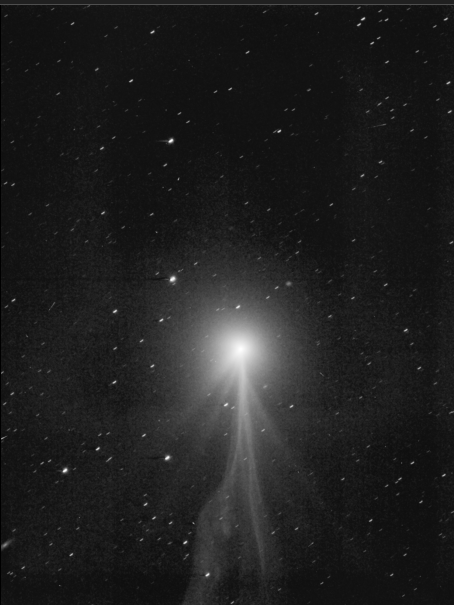
On 1 July 2025, the interstellar comet 3I/ATLAS was discovered. Images obtained at a heliocentric distance of 4.5 astronomical units (AU) — about 673 million kilometres from the Sun — already showed clear evidence of cometary activity. This object represents the third cometary body originating from another planetary system that has been observed visiting our…