The STESSy Group is a research and development team of scientists and engineers based at the Instituto de Astrofísica de Andalucía–CSIC (Granada-Spain). It devotes its efforts to develop instruments for the exploration of our Solar System with the aim of obtaining scientific data. The analysis and interpretation of these data allow us to advance in the understanding of the nature of the planets, their satellites, and the small bodies.
Latest news
-
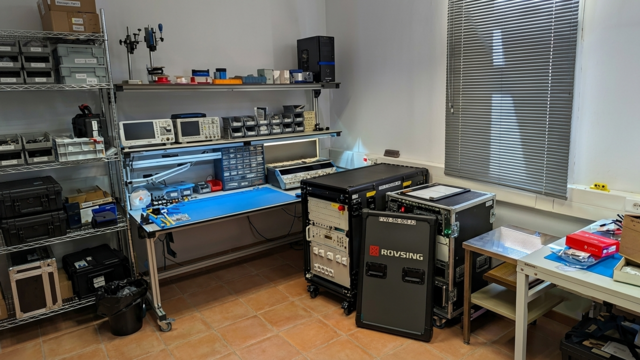
New Spacecraft Interface Simulator (SiS#2) successfully welcome in the STESSy lab at IAA-CSIC !!
We are pleased to announce that Engineers (Fernando Álvarez, José M. Castro and Alvaro Mazuecos) (see Fig. 1) in the STESSy group have welcomed the Spacecraft Interface Simulator (SiS) installed and operational at our facilities. Fig.1: Fernando Álvarez, José M. Castro, SiS#2 and Álvaro Mazuecos (from left to right) This high-fidelity integrated equipment, built by…
-
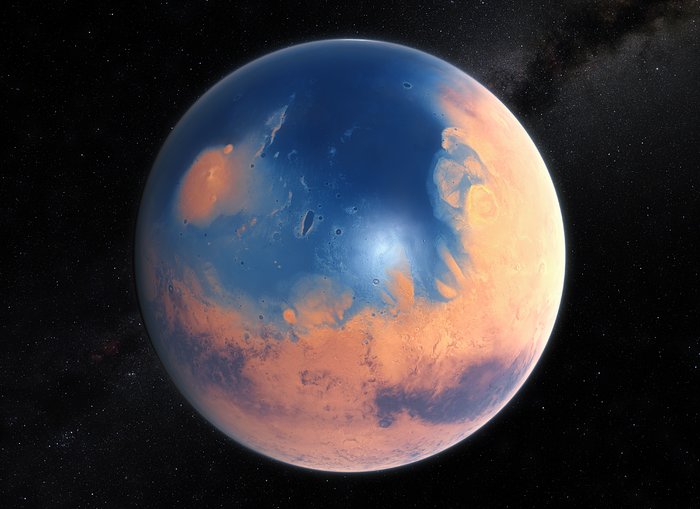
A faint young Sun and a warm and wet Mars, how could that be?
Mars today is a cold, dry desert. But, around 3.8 billion years ago, during the Noachian period, the planet showed clear signs of an active water cycle, with rivers, lakes, and even oceans which we can observe shorelines today. Yet, at that time, the Sun was only about 75% as bright as it is today,…
-
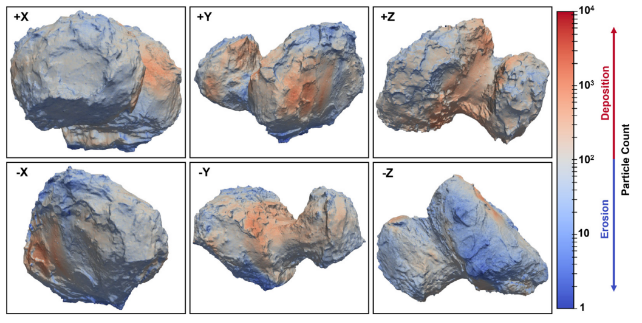
The paths that sculpt a comet
When the Rosetta spacecraft imaged the nucleus of comet 67P/Churyumov-Gerasimenko, the appearance was seen to vary significantly across the surface: some areas showed rock-like, exposed solid material, while others appeared to be coated in a blanket of dust. Subsequently, researchers understood the dust covering to consist of particles ejected by the comet’s own activity but…